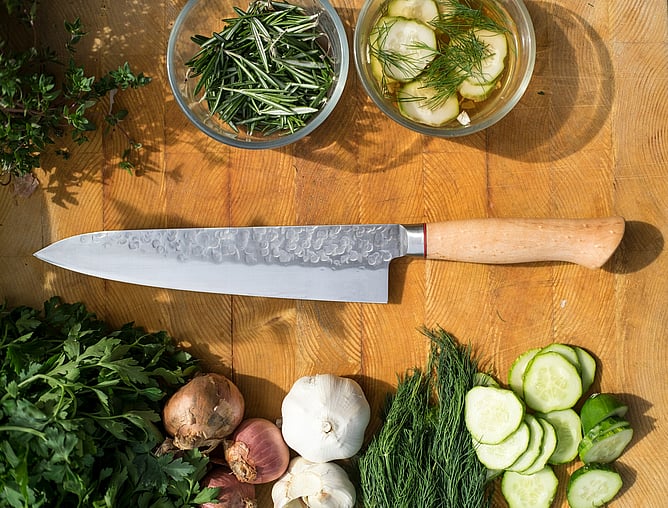
Think about the last meal you prepared. If you found yourself sawing through a tomato, struggling to cut a pumpkin, or tearing the skin on a piece of chicken, chances are your knife isn't doing its job. The right knife gives you more control, cleaner cuts, and a far more enjoyable cooking experience (and that difference will become obvious the moment you start chopping).
Once you start looking for a new knife, however, the options can feel endless. German steel, Japanese blades, forged construction, knife blocks, and countless opinions about what you should buy.
At Simply Divine Kitchen, we want to make buying cutlery straightforward. Whether you're replacing an old favourite or investing in your first quality knife, understanding a few key essentials can make the decision much easier.
In this guide, we'll walk you through the knives worth having in your kitchen, what to look for when choosing one, and how to keep them performing at their best for years to come.
The Core Four
While there are dozens of knife styles available, most home cooks only ever need four essentials that, together, cover everything from peeling fruit and slicing tomatoes to carving roasts and preparing weeknight dinners. Build your collection around these essentials, and you'll be equipped for almost any recipe that comes your way.
Knife type |
| Best for |
| Blade edge |
| Maintenance |
| Expected lifespan |
|---|---|---|---|---|---|---|---|---|
Chef's knife | Dicing vegetables, slicing meat, heavy chopping | Curved (for rocking) | Regular honing / annual sharpen | Lifetime | ||||
Santoku knife | Clean, straight slicing, mincing herbs, sticky foods | Straight with hollow edges | Regular honing / annual sharpen | Lifetime | ||||
Paring knife | Peeling, coring fruit, intricate trimming | Small, straight or curved | Low to medium | Lifetime | ||||
Bread knife | Slicing crusty loaves, soft tomatoes, layered cakes | Serrated (saw-like teeth) | Minimal (requires pro sharpen) | 5-10 years |
1. The chef's knife: for everyday use
Best for: Heavy-duty prep, dicing root vegetables, carving roasts, and rhythmic rocking chops.
If you could only own one knife, this would be it. Designed to handle the vast majority of cutting tasks with ease, it has a gently curved blade that allows for a natural and comfortable rocking motion on the chopping board.
Whether you're dicing onions, slicing chicken breasts, chopping herbs, or preparing pumpkin for roasting, a quality chef's knife delivers the versatility and control needed for everyday cooking.
Pros:
Exceptionally versatile and handles heavy-duty tasks with ease.
Durable steel resists chipping and holds an edge beautifully.
The weight of the blade helps do the cutting work for you.
Cons:
Can feel heavy if you are used to lighter knives.
Less suited to ultra-fine precision work.
Our recommendation: Kai Shun Classic Chefs Knife - 20cm

2. The Santoku knife: for precision and control
Best for: Slicing, clean dicing, and handling sticky ingredients like potatoes or raw fish.
Originating in Japan, Santoku translates to three virtues, referring to its mastery over slicing, dicing, and mincing. It is shorter, lighter, and flatter than a standard chef's knife, making it a favourite for home cooks who prefer agile, nimble tools over heavy steel.
Pros:
Lightweight and comfortable for extended prep sessions.
Delivers clean, precise cuts.
Excellent for vegetables, herbs, and fine slicing.
Cons:
Harder, thinner steel can chip if twisted against a bone or used on frozen food.
Not as well suited to heavier cutting tasks.
Our recommendation: Global Classic Fluted Santoku Knife - 18cm

3. The paring knife: for detail work
Best for: Peeling fruit, trimming vegetables, hulling strawberries, and other small, precise tasks.
While it may be the smallest knife in your collection, a paring knife is one of the most useful. Designed for jobs that require accuracy and control, it's ideal for any tasks that feel awkward with a larger blade, like peeling apples, trimming beans, or preparing garnishes.
Pros:
Offers maximum control for intricate, delicate work.
An affordable addition to your knife collection.
Very safe for handheld peeling.
Cons:
Not suitable for larger ingredients
Our recommendation: Kai Shun Premier Paring Knife - 10cm

4. The serrated bread knife: for tough skins and delicate interiors
Best for: Hard crusty sourdough, soft brioche, delicate tomatoes, and slicing through slippery citrus skins.
Despite its name, a bread knife earns its place in the kitchen far beyond baking. The serrated edge grips slippery or tough surfaces before slicing cleanly through softer interiors. That's why it performs so well on foods that can be difficult to cut cleanly with a standard knife, such as ripe tomatoes, crusty loaves, watermelon, and layered cakes.
Pros:
Slices through tough-skinned or delicate foods perfectly without flattening them.
Rarely needs sharpening.
Cons:
Can’t be easily sharpened at home with standard tools.
Creates crumbs when sawing through baked goods.
Our recommendation: Victorinox Bread Knife - 21cm

What to Look for When Choosing a Knife
While blade style matters, comfort matters just as much. A knife that feels perfect for one person may not feel right for another.
Weight and balance
Some cooks prefer a heavier knife that allows the blade to do more of the work, while others favour a lighter knife that feels fast and nimble. Neither is better than the other - it’s all down to whatever feels comfortable and controlled in your hand.
Handle comfort
A good handle should feel secure, balanced, and comfortable to hold. If you spend a lot of time preparing meals, even small differences in handle shape and grip can make a noticeable difference. Ultimately, comfort is personal - so we recommend looking for a handle that sits comfortably in your palm without creating pressure points, feels secure whether your hands are dry or slightly damp, and allows you to maintain a relaxed grip rather than squeezing tightly.
Full-tang construction
One feature worth looking for is a full tang. This means the steel of the blade extends all the way through the handle. Full-tang knives tend to feel better balanced, offer greater durability, and are less likely to loosen over time.
Knife Care 101
Looking after your knives properly will improve their performance, extend their lifespan, and help you get the most from your investment.
1. Skip the dishwasher
Dishwashers expose knives to high heat, harsh detergents, and repeated contact with other utensils. Over time, this dulls the blade and can damage the handle. Instead, wash your knives by hand with warm soapy water and dry them immediately.
2. Choose the right chopping board
Glass, marble, and ceramic boards may look beautiful, but they're incredibly hard on knife edges. For the best results, use timber, bamboo, or quality plastic chopping boards that are gentler on the blade.
3. Hone regularly, sharpen occasionally
A honing steel helps keep your knife performing at its best by realigning the edge between sharpenings. Sharpening, on the other hand, removes a small amount of steel to create a fresh edge. Most home cooks only need to sharpen their knives once or twice each year, depending on use.
Ready to Build Your Collection?
Whether you're replacing a single knife or investing in a complete collection, quality cutlery is something you'll appreciate every time you cook. Explore our range of premium kitchen knives online and discover carefully selected options for every cooking style. If you're visiting our Cambridge store, our team is always happy to help you compare different styles and find the right fit for your kitchen.